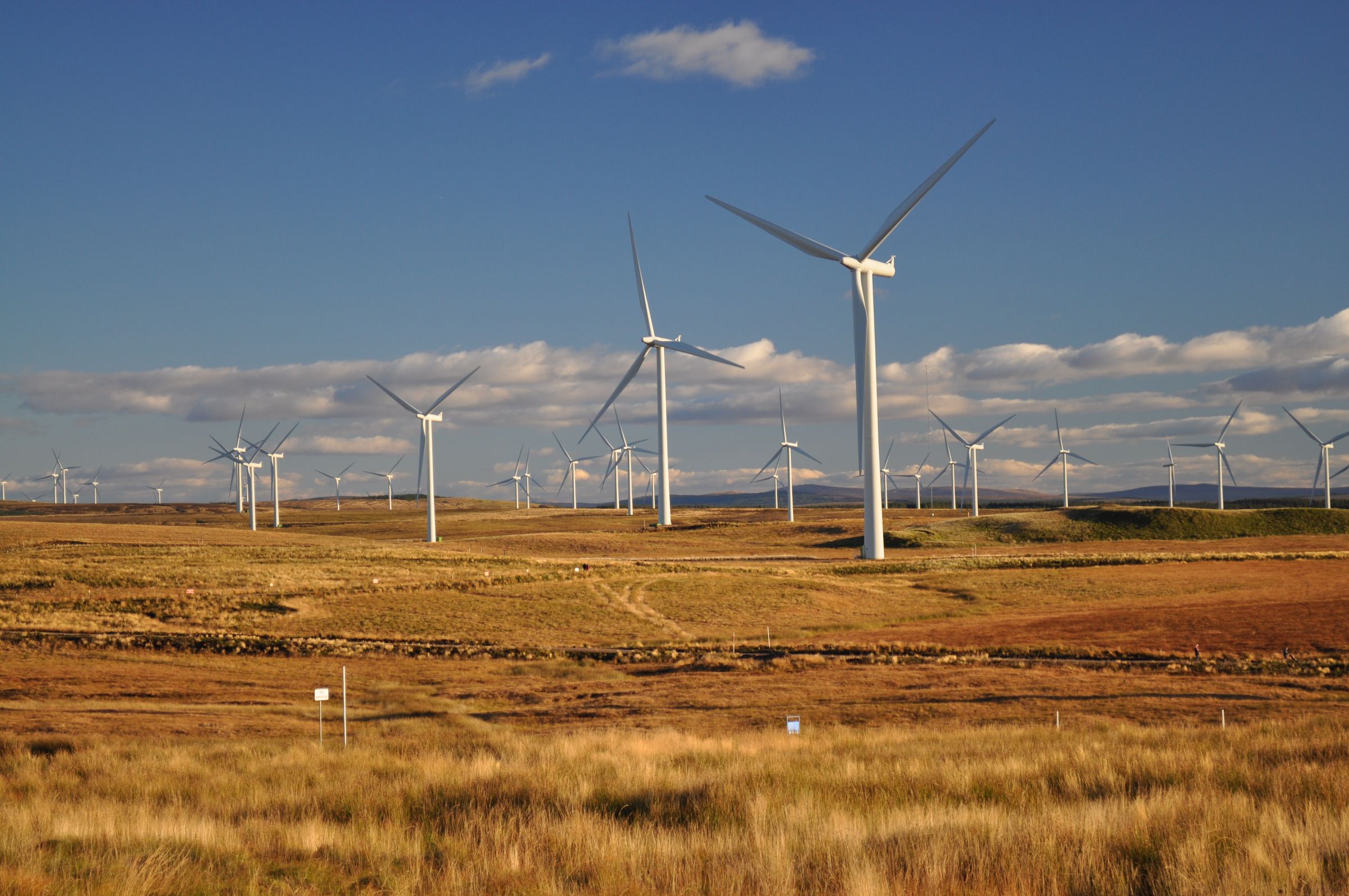
Africa holds an estimated 58 000 GW of onshore wind potential, yet less than 0.02% of that capacity has been installed to date. That gap between resource and revenue was the central commercial question at the 15th annual Windaba Exhibition and Conference, held on 6 and 7 October 2026 at the CTICC and hosted by the South African Wind Energy Association (SAWEA).
Juliana Kainga, Director of Africa WindPower at the Global Wind Energy Council (GWEC), used the event to launch the council’s biannual Status of Wind in Africa report. Her message to investors and developers was direct: the continent’s wind pipeline can become operational assets, but only if several market conditions are met at once. Those conditions are scaling corporate power purchase agreements, expanding grid infrastructure, leveraging local capital alongside development financing, and aligning public policy with industrial demand.
The returns side of the ledger is already visible. Africa has reached 11.1 GW in cumulative installed wind capacity, including a record 1.53 GW added in 2025 alone, even though transmission capacity remains a limiting factor. “South Africa is a clear example, particularly in the Cape provinces where some of the best wind resources are located. A project can obviously have a buyer and financing in place, but be unable to proceed at the required pace if the grid is not able to be accommodated,” Kainga said.
The GWEC projects installed wind capacity in Africa will reach 30 GW to 50 GW by 2035, with South Africa expected to exceed 15 GW. Kainga framed the payoff in explicitly economic terms: “The measure of success will be what Africa builds with the electricity once these projects are actually built out. We’ll see a lot more investment, a lot more industrial growth, exports, jobs and more reliable power.”
Government signaled its own capital commitments. Electricity and Energy Minister Kgosientsho Ramokgopa, addressing the first day, outlined plans to procure additional battery storage systems to store excess electricity, including from wind projects, and to sell surplus power to regional neighbours. He also committed to expanding transmission infrastructure to accommodate new generation capacity.
The conference’s theme, “Implementing Watt Matters: Policy. Power. People,” structured sessions around the commercial and regulatory architecture that determines whether capital flows into the sector.
On policy, a panel weighed the trade-off between using import tariffs to incentivise local industrialisation and the financial risks trade barriers impose on renewable energy project developers and original equipment manufacturers. Ian Davis of the Industrial Development Corporation argued that early costs are worth bearing: “Localisation is always going to cost a little bit to set up at first, but that cost is insignificant compared to the long-term economic benefits of local labour, factories and industrial capacity.”
The South African Renewable Energy Masterplan (SAREM) and its alignment with national generation planning under the Integrated Resource Plan 2025 also came under scrutiny. Noma Qase of the Department of Electricity and Energy described SAREM as “our blueprint for industrialisation in the country, where we seek to grow renewable energy and energy storage value chains … by building local manufacturing capacity, creating sustainable jobs and enabling inclusive economic development so that no one is left behind.”
Meanwhile, the economics of local manufacturing drew competing assessments. Mtha Moses of the Localisation Support Fund noted that local manufacturers struggle to compete with lower-cost international imports because of higher input costs and lack of scale. Jack Redmore of GreenCape countered that “South Africa doesn’t have to manufacture every single component across the solar PV, wind and battery value chains,” suggesting the country focus on components where it holds a competitive edge.
Market design was another focus. Speakers examined how the South African Wholesale Electricity Market (SAWEM) aims to transform electricity trading across sub-Saharan Africa through spot-market price signals, bilateral contracting and day-ahead dispatch. Under SAWEM, high penetrations of zero- to marginal-cost wind and solar power are expected to drive spot prices down during peak generation hours, mirroring wholesale markets in Europe.
On infrastructure, Andrew Etzinger, General Manager for Energy Market Services at the National Transmission Company South Africa (NTCSA), stressed that private and public sectors should work together to fund and deliver grid expansion. Prof. Prathaban Moodley of the South African National Energy Development Institute highlighted the role of municipalities, noting that the National Treasury is sponsoring projects in 17 priority municipalities covering smart metering, loss reduction and asset health monitoring to prevent local grid collapse.
A panel with Eskom, the NTCSA and the National Energy Regulator of South Africa examined the operational transition to the Grid Capacity Allocation Rules, which replace a “first-come, first-served” framework with a “first-ready, first-served” principle, prioritising shovel-ready projects over speculative ones. The NTCSA is also due to formally launch a Grid Access Unit later this month, including a portal giving developers real-time visibility of queue positions, available substation capacity and application status.
The social dimension carried financial weight too. The inaugural People Pavilion celebrated SMMEs, community trusts and local initiatives in communities where independent power producers operate, and Cosatu Western Cape Provincial Secretary Tony Ehrenreich advocated worker shareholding in renewable generation facilities to give employees a direct financial stake in the transition. The Presidential Climate Commission’s Blessing Manale offered a closing caution: “It cannot be policy first. It’s got to be people, power and policy. It’s got to be people first. Otherwise, we’ll end up in a situation where, while there’s the right energy policy, people are left behind.”
For investors and operators, the conference’s underlying message was consistent: the capital, the buyers and the resource are largely in place. The decisive variable is whether grids, market rules and industrial policy advance quickly enough to convert Africa’s wind pipeline into bankable assets.