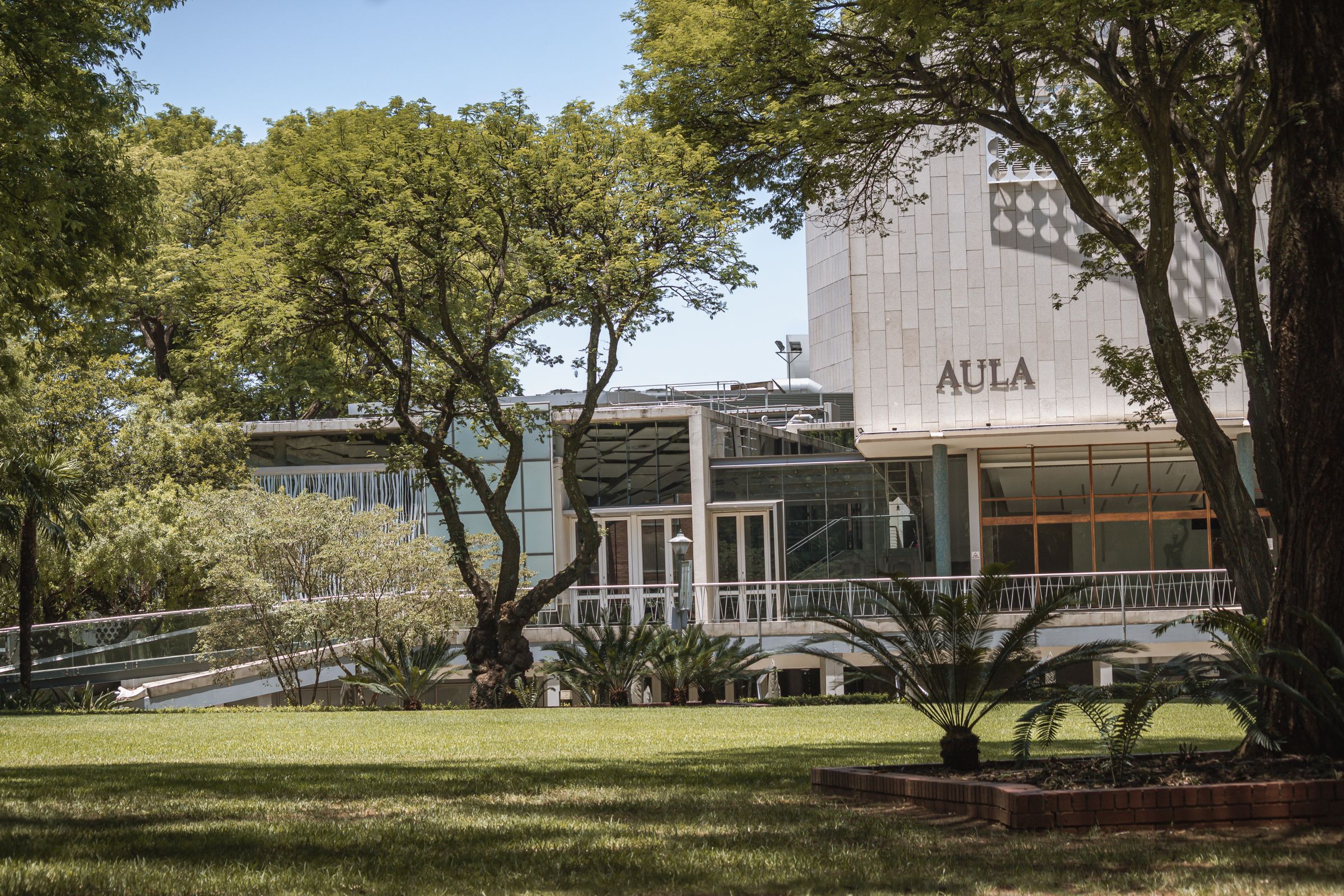
South Africa’s first national Digital Humanities position paper is due for completion later this year, and the drafting work has already begun. The groundwork was laid at the inaugural Digital Humanities Cluster Summit, hosted at the University of South Africa (UNISA), where representatives from at least 20 institutions mapped out how the field should be defined, delivered and developed across higher education and research.
The summit was convened jointly by Nelson Mandela University, through its Digital Humanities Hub, North-West University, UNISA and the South African Centre for Digital Language Resources (SADiLaR). Its working output now moves into the drafting phase. Professor Menno van Zaanen (SADiLaR) and Professor Janelize Morelli (NWU) serve as lead editors of the position paper, which is expected to consolidate the contributions of the summit’s working groups and provide a shared reference point for the field’s priorities, future collaboration, policy engagement and institutional development.
Dr Johannes Sibeko, coordinator of Nelson Mandela University’s Digital Humanities Hub, led the University’s team at the summit. “The summit provided an important opportunity for institutions to consider how Digital Humanities can develop in ways that respond to South Africa’s intellectual, cultural and linguistic contexts,” he said. “For Nelson Mandela University, these discussions are particularly relevant as we continue to develop our Digital Humanities curriculum and strengthen interdisciplinary research that draws on digital methods to address questions meaningful to our society.”
Delivery on the ground was visible in the working groups themselves. Jonathan van der Walt presented as part of Working Group 2, which focused on curriculum development and the classification of Digital Humanities within higher education. Dr Benjamin Izu presented with Working Group 5.1, exploring Africanisation and decolonisation in digital knowledge production. Postgraduate student Anesipho Tshisane contributed online to Working Group 9, which considered policy engagement and institutional recognition, including engagement with the Department of Higher Education and Training, the Council on Higher Education and the Department of Science, Technology and Innovation.
Meanwhile, other Mandela University colleagues fed pre-summit discussions into the event. Faith Blignaut and Juneth Esau participated in discussions on digital preservation and archives; Solomon Bopape contributed to postgraduate programmes and researcher development; Nompilo Makamu participated in Africanisation and decolonisation discussions; and Qaqambile Sitela contributed to policy engagement. Professor Pamela Maseko, Executive Dean of the Faculty of Humanities, joined the summit online, highlighting the importance of sustained collaboration and building on South Africa’s strengths to advance research and benefit communities.
A central theme across the ten working groups was the need to develop a shared understanding of Digital Humanities and to use that understanding to inform approaches grounded in African histories, languages, Indigenous Knowledge Systems and intellectual traditions, rather than simply adopting frameworks developed elsewhere. Discussions explored how Africanisation and decolonisation could shape digital research while positioning African scholars and communities as active contributors to knowledge production. South Africa’s multilingualism was also recognised as a resource for developing digital tools, expanding research in African languages and contributing to global conversations about technology and knowledge.
The working groups also flagged the operational requirements for sustainable digital scholarship: universities, research infrastructure providers, libraries, archives, heritage institutions, policymakers, funders and communities all need to collaborate in strengthening research capacity. For Mandela University, the discussions offered a chance to align its developing Digital Humanities curriculum with national priorities, including balancing theoretical foundations with practical digital research skills, promoting ethical engagement with technology and ensuring that teaching reflects South African and African contexts.
“Collaboration will be essential if Digital Humanities is to develop into a sustainable and recognised field in South Africa. By connecting our expertise and resources, institutions can strengthen research capacity, support innovative scholarship and ensure that digital approaches respond to the needs and priorities of our communities,” said Dr Sibeko.
For the University, participation reinforces its commitment to national conversations about digital scholarship while advancing research and teaching that draw on South Africa’s intellectual, cultural and linguistic resources. What remains to be seen is how the drafting phase translates the summit’s working-group output into a position paper that holds across all twenty-plus institutions when it lands later this year.