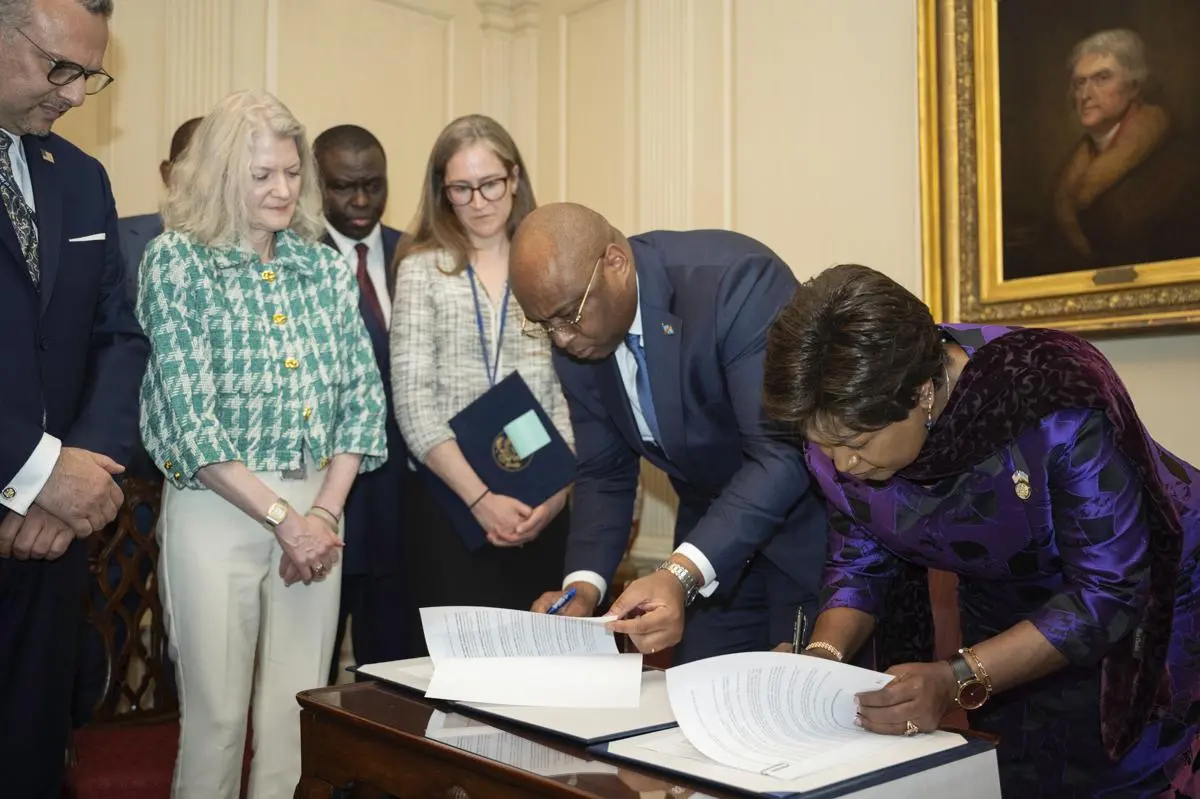
Historic peace deal between Rwanda and Democratic Republic of Congo signed in Washington
Rwanda and the Democratic Republic of Congo (DRC) have taken a decisive step towards lasting peace by signing a historic peace agreement in Washington, with active mediation from the United States. The agreement aims to end decades of conflict, mutual mistrust and instability across the Great Lakes region of Africa. This significant gesture marks a genuine turning point in relations between the two African nations.
The roots of the conflict
Since the end of the Rwandan genocide in 1994, relations between Kigali and Kinshasa have been marked by constant tension. Armed Hutu groups operating in eastern DRC, accused of involvement in the genocide, have served as a pretext for Rwandan military interventions. In response, the DRC has accused Rwanda of plundering its natural resources and destabilising its eastern provinces.
Previous peace efforts, notably those by the African Union and the International Conference on the Great Lakes Region, have often failed due to lack of trust between the two governments. This is why US involvement in this agreement proved crucial to the success of this new peace initiative.
What the peace agreement includes
The agreement provides for:
- An immediate halt to support for armed groups in eastern DRC.
- The withdrawal of irregular forces operating in both countries.
- The establishment of a border monitoring commission.
- A cross-border economic development programme.
- Initiatives for the reintegration of former combatants.
The crucial role of the United States and international partners
Through a series of negotiations facilitated by the US State Department in Washington, the two nations reached a compromise. The European Union, the United Nations and the African Union have expressed their support and committed to helping implement the agreement.
Expected impact on regional stability
The signing of this peace agreement could transform the Great Lakes region into a genuine hub of stability. Infrastructure projects, joint economic zones and strengthened cultural dialogue could follow this political breakthrough.
Economic corridors between Goma, Bukavu and Kigali are already being studied, as is an agreement on responsible mining.
Civil society backing
Civil society actors in both countries have welcomed the agreement. NGOs are calling for transparent and inclusive implementation, with local communities involved in monitoring and reconciliation mechanisms.
What comes next
Several ministerial summits are planned over the next six months to oversee implementation. A regional peace forum will be held in Kigali with the participation of African leaders, international diplomats and youth representatives.
Find out more:
- 🌍 UN peace initiatives
- 🌍 The African Union and regional security
- 📰 News on African politics
- 🗞️ Jeune Afrique – Regional news
Thank you for visiting the site. For more news, visit our website
Thank you for visiting the site. For more news, visit our website africaciviclens.com
Published 29 June 2025 by the Africa Civic Lens editorial team.