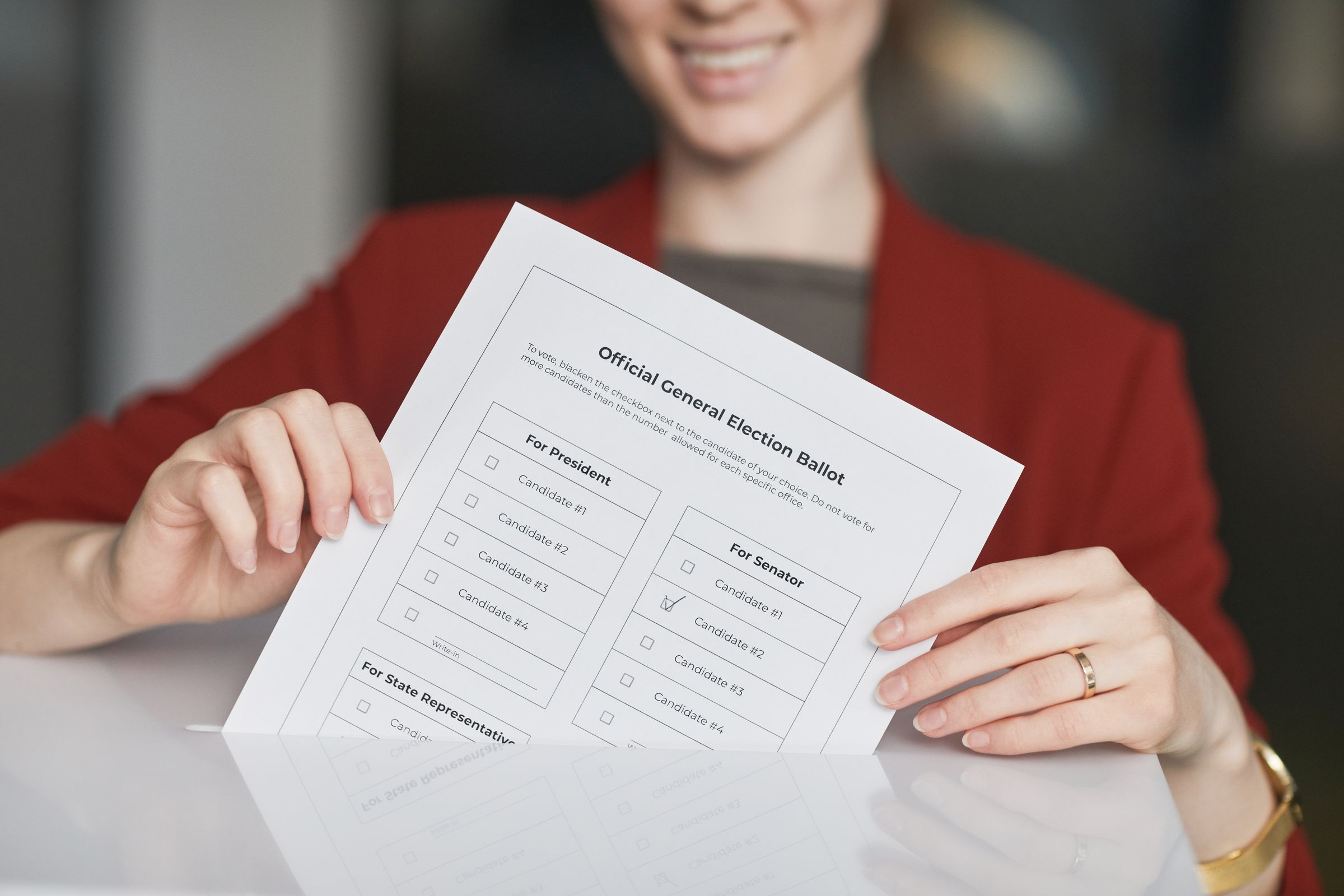
Nearly 14.9 million South Africans stood in queues to vote in the 2026 Local Government Elections, and on Sunday night the Electoral Commission told them what their effort had produced. At the National Results Operation Centre in Midrand, Chairperson Mosotho Moepya declared the polls free and fair, closing a contest in which roughly half the 29.2 million registered voters turned out.
That 52% turnout rose 6.1 percentage points from the 45.9% of the 2021 local elections, a shift the Commission presented as evidence of renewed engagement in local democracy. “We are gathered here this evening to not only declare the 2026 Local Government Elections but also to pay tribute to all South Africans whose efforts in the various parts of our beautiful country made this evening possible,” Moepya said. All 213 municipal councils have been finalised and declared.
What the voters themselves felt was captured by the Human Sciences Research Council’s Elections Satisfaction Survey 2026, which assessed how people viewed the integrity and efficiency of the process. The findings were largely reassuring: 90% regarded the procedures as free and 91% as fair, while 95% were satisfied with the Commission’s services and 91% queued for no longer than 30 minutes. Trust in the Electoral Commission remains high at 81%, though it has gradually declined from 93% in 2016. The survey also flagged concerns requiring targeted attention, including intimidation, impartiality, inclusive voting and information gaps, even as it concluded that the electoral process retains public confidence among voters.
The results now reaching every ward and council chamber tell a story of a fragmented local landscape. The African National Congress received 30.76% of the vote and secured 3,246 council seats, followed by the Democratic Alliance at 24.64% and 1,695 seats. The uMkhonto weSizwe Party took 9.76% and 785 seats, the Economic Freedom Fighters 6.22% and 588 seats, and ActionSA 5.67% and 313 seats. Other parties and independent candidates collectively received 22.97% and secured representation across municipal councils.
For residents, control matters most. The ANC achieved outright majorities in 53 municipalities and leads in 128, while the DA controls 12 outright and leads in 32. The Inkatha Freedom Party holds outright control in five municipalities and leads in 19, the MK Party controls three outright and leads in 19, and Rise Tsantsabane Communities achieved outright control in one municipality. Of the 213 municipalities, 72 councils have a party with an outright majority of seats. In the remaining 127, no party obtained more than 50%, leaving hung councils where negotiation and coalition-building will shape daily governance for the people who live there. Spoilt votes accounted for 1.84%.
The scale of the contest was vast. A total of 521 political parties and 636 independent candidates fielded approximately 137,000 candidates across ward and proportional representation contests. Of the 10,526 council seats contested, 4,485 were ward seats and 4,340 were proportional representation seats, with 707 district council seats allocated through the 40% proportional representation component. A further 994 district council seats, the remaining 60% component, will be filled through the election of councillors by local municipalities under the legislative framework.
Moepya said the elections were conducted largely in a peaceful environment, and he thanked voters, candidates, political parties, election staff, observers and other partners. He also paid tribute to an IEC staff member who died at a voting station in Mahikeng on Election Day, a reminder of the human cost behind the count.
The Commission pledged an honest review of what worked and what did not. “We will examine the experiences of these elections honestly and systematically. We will listen to the concerns of voters, political parties, candidates, observers and our own staff,” Moepya said. He congratulated those elected and stressed that local government carries a particular responsibility because it shapes people’s everyday experiences of public services and their communities. “The ballot paper has given you a mandate and a responsibility,” he told them.
Democracy, he added, continues beyond Election Day, with citizens responsible for asking questions and holding elected representatives accountable. “It is then my singular honour to hereby declare the 2026 Municipal Elections concluded as free and fair,” he said. Further details of the declaration are available at https://www.sanews.gov.za/south-africa/iec-declares-lge-2026-free-and-fair.
With 127 hung councils, the question now facing residents is who will govern their towns, and how well.