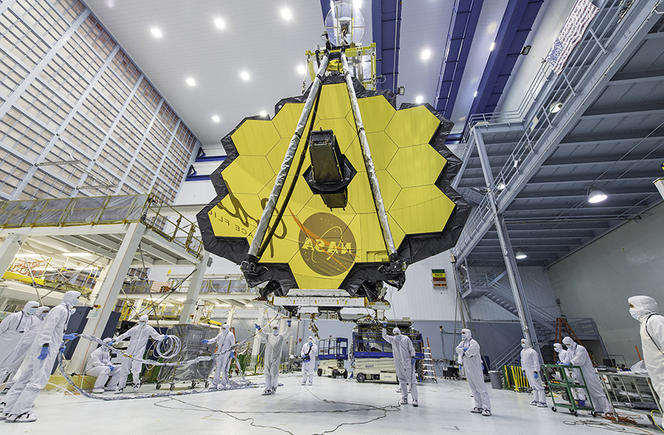
A genuine scientific competition is underway between American, Japanese and international teams to discover why our universe exists, how planets form, and what drives cosmic expansion.
1. Why this race?
As instruments like the James Webb Space Telescope (JWST) and the upcoming Extremely Large Telescope (ELT) come online, scientists are testing fundamental theories – particularly by checking the universe's expansion rate and measuring the proportions of dark matter (~25%) and dark energy (~70%)
2. Focus on American and Japanese projects
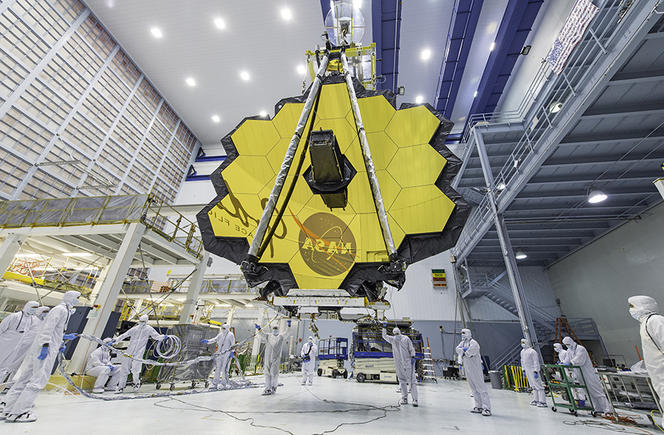
James Webb Space Telescope (USA & partners)
Since its launch in 2021, JWST has delivered unprecedented spectroscopic data. It can observe ancient galaxies, analyse the atmospheres of exoplanets and measure an expansion rate ~8% higher than expected :contentReference[oaicite:4]{index=4}.
British-Japanese and Canadian teams have detected potentially biological gases on K2‑18b, such as methane; the strongest evidence yet of possible extraterrestrial life :contentReference[oaicite:5]{index=5}.
Japanese prototypes and international partnerships
Japanese researchers are investing in advanced techniques (coronagraphs, integral field spectrographs: IFU) to identify the earliest cosmic ages, dark stars and protogalaxies :contentReference[oaicite:6]{index=6}.
3. The scientific stakes
Formation of stars, planets and galaxies
Theoretical models (numerical simulations, laboratory work and telescopes) help us understand how planets and stars and planets form :contentReference[oaicite:7]{index=7}. JWST results reveal galaxies already massive just hundreds of millions of years after the Big Bang :contentReference[oaicite:8]{index=8}.
Dark matter & dark energy: the invisible giants
About 95% of the universe is "dark". Understanding the nature of these components is crucial: they govern both the formation of structures and accelerating expansion :contentReference[oaicite:9]{index=9}.
Searching for biosignatures and extraterrestrial life
Detecting gases like methane or ozone in the atmospheres of exoplanets in the "habitable zone" (Goldilocks) has been the focus of intensive work since JWST and TESS :contentReference[oaicite:10]{index=10}. A discovery on K2‑18b is "the strongest evidence to date" :contentReference[oaicite:11]{index=11}.
4. Tools & technologies at the heart of the competition
- JWST – infrared spectroscopy, capable of probing the very first cosmic objects.
- ELT (39 m) – under construction in Chile, designed for detailed analysis of exoplanets and galaxies
- IFU & coronagraphs – essential for direct detection of exoplanets and analysis of
- Numerical modelling and ground-based labs – to predict planet formation and their atmospheres
5. Major implications for our understanding of the universe
A faster expansion rate may point to gaps in cosmological theories (ΛCDM): dark energy poorly understood or new physics :contentReference[oaicite:. Biosignatures and the detection of extraterrestrial life would reshape our place in the cosmos :contentReference
6. Looking ahead: partnerships and next steps
International efforts are intensifying: ELT projects, WST, missions complementing JWST, ground and space telescopes, Japan-USA-EU collaboration… By 2030–2040, new facilities will enable more precise observations.
📌 In summary
Scientists are racing to answer three big questions:
- Why does the universe exist and how did it form?
- What is it made of – dark matter and energy?
- Are we alone in this vast cosmos?
Current and future instruments (JWST, ELT, IFU, modelling…) will help answer these in the coming decades.
Article written by YourName – Get in touch.
JWST (Wikipedia article) • Our astrophysics articles
Thanks for reading for more news please visit our website
this post by bbc.com/africa