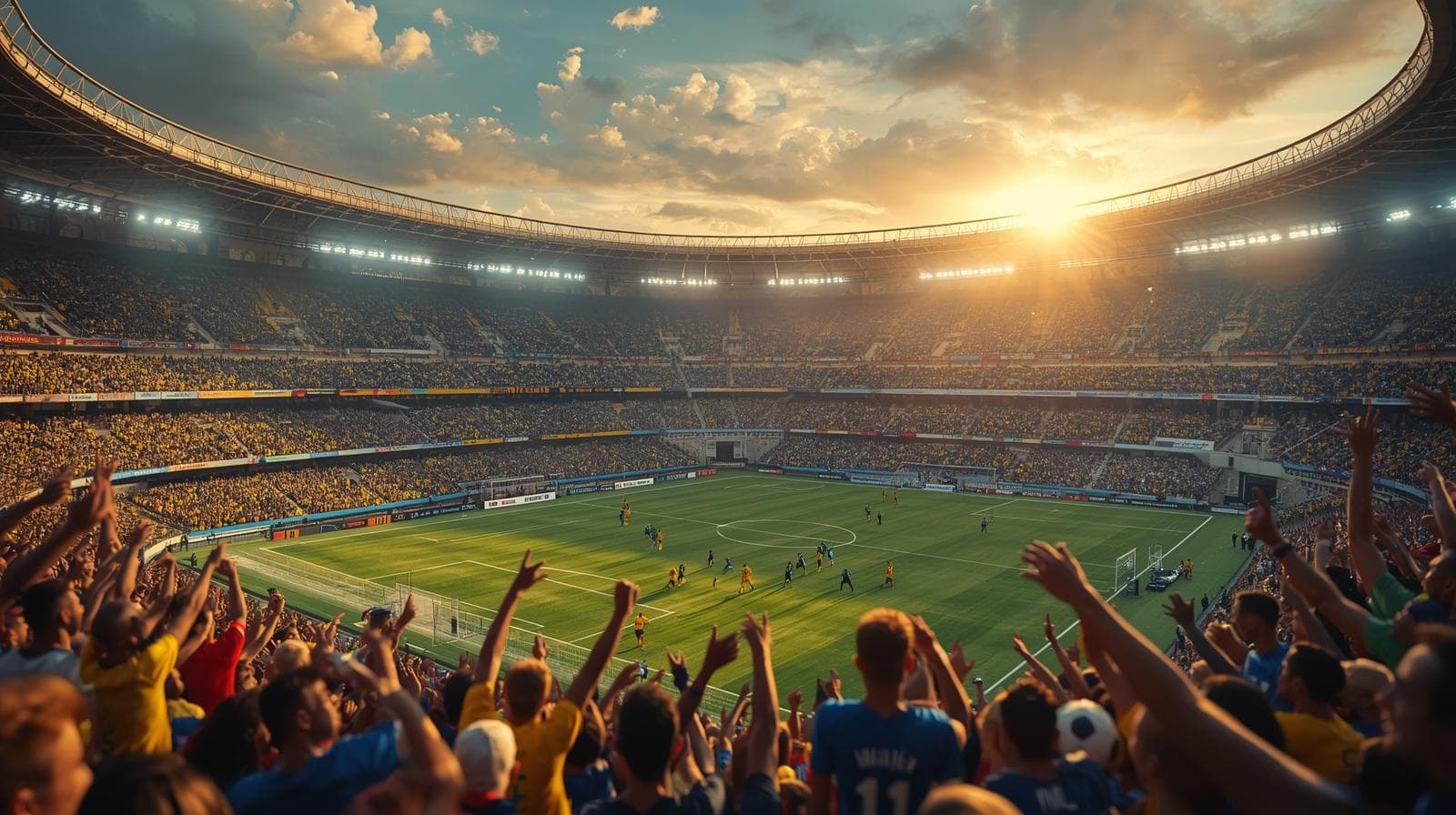
The 2026 World Cup is already shaping up as a historic moment for African football. With surprise results, fierce rivalries and unexpected rises, Africa's qualifying campaign is proving unusually intense. The continent's traditional powerhouses are being challenged by new contenders determined to shake up the established order. In this article, we explore the 7 Powerful Shifts that are redefining Africa's path to the 2026 World Cup.
1. World Cup: Morocco's Lions confirm their dominance
Morocco continues to prove that Qatar 2022 was no one-off. Under Walid Regragui, they're dominating their group with clinical efficiency, blending European experience with African flair. Their defence, anchored by Romain Saïss, remains the continent's most solid, while Azzedine Ounahi and Hakim Ziyech control the midfield. This Morocco side has become the model for other African nations to follow—both in organisation and tactical discipline.
2. Egypt reborn under Salah's brilliance
After several disappointing campaigns, Egypt is finding its way back. Under Rui Vitória, the Pharaohs have rediscovered their attacking power and defensive stability. Mohamed Salah is leading the charge brilliantly, recalling Egypt's greatest football moments. But beyond Liverpool's star, it's the collective spirit that's making the difference. Young talents like Omar Marmoush and Ahmed Hegazy represent this ambitious new era.
3. West Africa's dramatic shift
West Africa is witnessing a spectacular upheaval. Ghana, once all-powerful, now faces the rapid rise of Cape Verde and Mali. These two teams, long dismissed as outsiders, are showing impressive cohesion and intensity. Their success rests on tactical rigour and the confidence of players competing in Europe. African football is spreading: talent is no longer concentrated in a few hands but distributed across the continent.
4. World Cup: South Africa finds its way again
After years of uncertainty, South Africa seems to be rediscovering its football identity. Under Hugo Broos, the Bafana Bafana are building intelligent collective play around young PSL talent. The team combines pace, high pressing and technical boldness. This new generation embodies modern football without self-doubt, capable of matching the continent's best sides.
5. Nigeria searching for consistency
Nigeria remains an enigma: an endless source of talent, yet persistently struggling to find tactical coherence. The Super Eagles swing between flashes of genius and moments of confusion. Yet with Victor Osimhen in peak form and an attack among Africa's most feared, anything is possible. What they lack is a solid structure behind the scenes to turn potential into concrete results.
6. The outsiders are making waves
The 2026 World Cup qualifiers have seen teams emerge that few expected at this level. Botswana, Mozambique and the Comoros are impressing with their discipline and unity. These nations, once sidelined on the continental stage, are now benefiting from more professional leagues and their diaspora networks. Their success shows that African football is entering an era of balance, where every team now has a say.
7. Senegal navigating transition and ambition
The Senegal remains a major force but is going through a complex transition. After the golden generation led by Sadio Mané and Kalidou Koulibaly, coach Aliou Cissé is building a new balance. Young players like Lamine Camara and Nicolas Jackson are stepping up with enthusiasm, but maintaining continuity is the challenge. The team retains exemplary defensive solidity but must rediscover the attacking edge that brought continental glory.
8. The growing role of African diasporas
More and more African teams are tapping into their diaspora in Europe. Players trained in France, Belgium or the Netherlands are choosing to represent their countries of origin, boosting the continent's competitiveness. This trend is profoundly reshaping African football. Through these talents, teams gain better tactical understanding and increased professionalism, bringing Africa closer to world standards.
9. The economic and political impact of qualifying
The 2026 World Cup is more than just a sporting matter—it's economic and political too. Qualification can boost tourism, strengthen national unity and attract investment in infrastructure. According to analysis from the official CAF website, an African nation's World Cup participation generates an average 20% rise in sports and media-related revenue. Football becomes a strategic development tool.
10. Uncertainty ahead and final surprises
As the final qualifying phase approaches, many uncertainties remain. Teams like Uganda, Burkina Faso and Zimbabwe keep surprising with their resilience and ability to overturn expectations. Every match becomes crucial, and supporters feel the tension at each encounter. All of Africa is watching closely, aware that a few more teams could radically change the face of the 2026 World Cup.
Conclusion: The road to 2026
The 2026 World Cup in Africa promises to be a memorable tournament. Between established nations and ambitious outsiders, the continent is set to show all its football richness and diversity. Every team is fighting not just for sporting glory but for the economic and social impact that qualification brings. To learn more about emerging talent and African team strategies, check out our detailed article on African talent analysis. African football is preparing to write a new chapter in its global story.