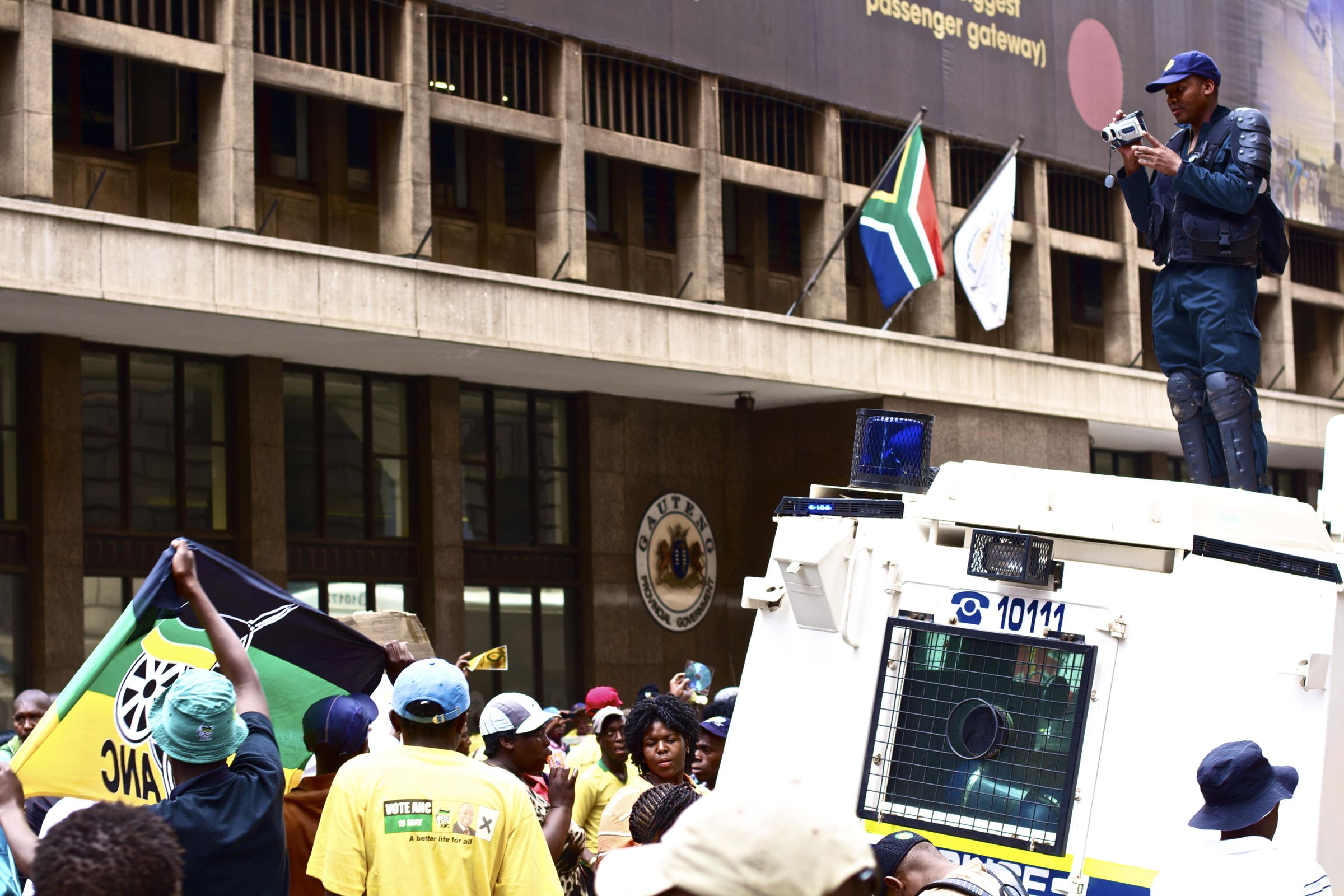
The African National Congress’s National Executive Committee convened in Johannesburg on Thursday to decide how the party will govern after an election result that stripped it of its municipal dominance and placed its leadership under scrutiny.
The committee, meeting under President Cyril Ramaphosa and other senior officials, must assess the damage from last week’s local government elections. The ANC secured only about 31 percent of the vote, its worst showing ever. The committee is expected to adopt a framework to guide coalition negotiations and to hear reports on initial talks with other parties, the ANC said.
The stakes are institutional as much as political. Under South African law, newly elected councils must convene within 14 days of the formal declaration of results to elect mayors and other office-bearers. With the ANC no longer commanding outright majorities in most major metros, the party must reach binding agreements with rivals inside that statutory window or risk leaving councils without leadership.
Cape Town was the exception. It was the only one of South Africa’s eight major metros where a single party won an outright majority, with the Democratic Alliance, the ANC’s closest rival, taking 56.4 percent of the vote there. Elsewhere, fragmented results will mean complex coalition bargaining, a process the party has historically struggled to manage. Previous local coalitions have been plagued by infighting, shifting loyalties and collapsing majorities, often leaving councils paralysed and basic services neglected.
The electoral decline reflects a broader erosion of the ANC’s governing mandate. The party, Africa’s oldest liberation movement, has long relied on the political capital of its anti-apartheid legacy. But voters punished Ramaphosa’s party over corruption scandals and its failure to deliver basic public services, with support falling sharply across key urban centres including Johannesburg and Pretoria. Though it remained the largest party nationally, the result extends a pattern of accountability already imposed at the national level: the ANC was forced to share power after losing its parliamentary majority in a 2024 general election, entering a government of national unity with nine other parties.
Party officials sought to frame the response as a matter of governance rather than patronage. On Wednesday the ANC said its response would not be reduced to “negotiating for positions” but would focus on improving South Africans’ lives and advancing the party’s renewal.
“We respect the choices voters made and acknowledge the decline in our support,” spokesperson Mahlengi Bhengu said. She added that the ANC had a “clear” plan that can improve the lives of all South Africans. “We are going to this meeting confident in the programme and determined to put it to work,” she said.
Meanwhile, the meeting carries weight for the party’s own leadership arrangements. The ANC approaches a leadership transition, with the party expected in the coming months to choose the candidate to lead it into a 2029 general election. Local media have reported that some within the movement want Ramaphosa to step down as ANC president before the end of his term, arguing the party needs a reset after its latest electoral blow. Ramaphosa has dismissed speculation that he intends to resign.
His absence from parliament on Thursday underscored the priority the party leadership placed on the session. Ramaphosa cancelled a planned appearance in parliament to answer lawmakers’ questions in order to attend.
The questions ahead are concrete. Whether the framework adopted by the National Executive Committee can produce stable coalitions where past bargains have collapsed; whether the statutory 14-day deadline for electing mayors and office-bearers will be met across the metros; and whether the party’s stated commitment to renewal over position-seeking will hold in negotiations. The answers will shape not only who governs South Africa’s cities, but how accountable those governments are to the voters who have just delivered their verdict.